
Table of contents
- Read this first
- What Neurocombat means in Spiral Combat
- Pressure changes the map before it changes the technique
- Use the cue-choice-reset framework
- A hypothetical round-review example
- How fighters and coaches can train it
- Where the framework should stop
- A seven-day practice plan
- Common mistakes and better fixes
- Reader checklist
- Next Spiral Combat path
- Related Spiral Combat reading
- FAQ
- Key takeaways
Direct answer: In this article, Neurocombat is a Spiral Combat coaching label for reviewing perception and decision-making under fighting pressure. It asks the athlete to mark the first visible cue that appears alongside fewer usable choices, then test a simple reset before a late reaction becomes the whole problem.
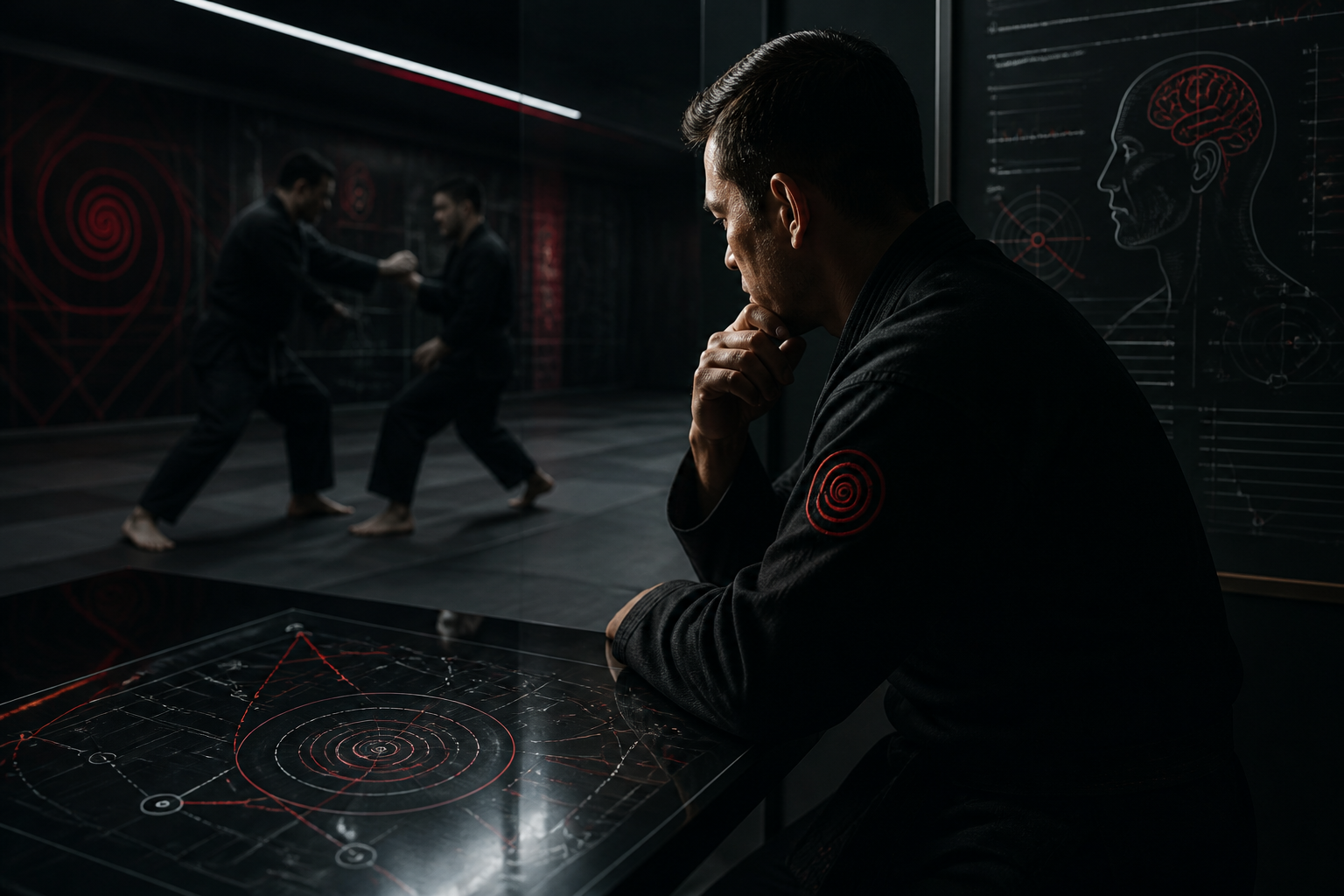
It is a coaching framework, not a medical diagnosis, treatment method, or claim that a coach can see inside an athlete's brain. The value of the term is practical: it gives fighters and coaches a shared way to discuss what the footage suggests the athlete may no longer have been tracking, which choice became unavailable, and how to test a cleaner next exchange.
Read this first
- The point is not to sound scientific. The point is to make attention under pressure visible enough to coach.
- Start with an observable cue such as a closed exit, a frozen lead foot, a lost frame, or eyes fixed on one threat.
- Treat every example as a testable coaching read, not a universal law about every fighter.
What Neurocombat means in Spiral Combat
In this article, Neurocombat is a Spiral Combat coaching label for reviewing perception and decision-making under fighting pressure. It is a coaching framework, not a medical diagnosis, treatment method, or claim that a coach can see inside an athlete's brain. A coach cannot know an athlete's internal state from one clip. The coach can mark visible positioning, gaze direction, and responses, then form and test a hypothesis about what the athlete may not have noticed and which choices were physically available.
That distinction matters. Saying "the fighter panicked" closes the conversation because it labels the person. Saying "the footage suggests the open-side exit stopped guiding the fighter's response after the second feint" creates a coaching question that can be reviewed, drilled, and checked again. Neurocombat is useful only when it moves the conversation from a vague mental label to a visible cue and a testable hypothesis.
The framework also protects the athlete from being asked to solve everything at once. Pressure can affect stance, breathing, distance, rhythm, and attention in the same exchange. A useful review identifies the first meaningful change, then chooses one correction small enough to survive live resistance.
Do not diagnose the fighter. Name the cue, the choice it removed, and the reset you want to test.
Pressure changes the map before it changes the technique
In a Neurocombat review, test whether pressure reduced the choices visible in the exchange before the final technical mistake appeared. The athlete may still know the correct technique while the space or timing needed to use it has already disappeared. Footage alone cannot prove the attention behind that response, so the review should treat attention as a question to test rather than a fact to announce.
Consider a fighter who normally circles cleanly. Under calm conditions, the exit looks like a footwork decision. Under pressure, the important moment may happen earlier: the lead foot squares, the eyes stay on the hands, and the open-side lane closes. By the time the fighter tries to circle, the technical mistake looks like slow footwork, but the decision was already late.
This is why the framework begins before the obvious failure. The useful question is not only, "What did the fighter do wrong?" It is, "What changed first that made the clean option harder to see or use?" That question links perception to geometry without pretending that every bad exchange has one mental cause.
- Geometry cue: an exit closes, the stance squares, or the base loses a useful angle.
- Timing cue: the athlete starts responding after the opponent has already taken the next beat.
- Attention cue: one threat becomes so dominant that the athlete stops scanning for the second problem.
- Rhythm cue: the athlete can act only after a familiar setup and freezes when the cadence changes.
Use the cue-choice-reset framework
For this review method, use three prompts: cue, choice, reset. A cue is the first change you can point to. A choice is the option that became harder, disappeared, or was selected too late. A reset is the smallest action that restores enough structure to read the next moment.
The framework is intentionally compact because a live round does not leave room for a lecture. In film study, you can add detail. In sparring, the same idea should fit into one sentence: "When the lead foot squares, recover the angle before trading again."
A reset is not always retreat. It might be a frame, a level change, a stance recovery, a hand-fight connection, a clinch turn, or one breath while protected behind structure. The right reset depends on the position. The standard is whether it restores a usable choice, not whether it looks calm from the outside.
| Layer | Review question | Example coaching note |
|---|---|---|
| Cue | What changed first? | The open-side exit closed when the lead foot squared. |
| Choice | Which option became unavailable? | The fighter could no longer circle without crossing the stance. |
| Reset | What small action restores the map? | Recover stance and frame before re-entering the exchange. |
| Test | How will we know the read is useful? | The athlete identifies the cue earlier in the next controlled round. |
A hypothetical round-review example
Hypothetical example: a fighter is comfortable at long range until the opponent doubles the jab and steps outside the lead foot. The fighter then backs straight to the fence, covers, and waits. A shallow review says the fighter needs more confidence. A Neurocombat review asks what became unreadable first.
The clip shows that the fighter's eyes stay on the jab while the opponent's step removes the open-side exit. The lost choice is not courage; it is lateral movement from a squared stance. The proposed reset is to frame or post while recovering the lead foot, then exit before trying to win the exchange back.
That explanation is still a hypothesis until training tests it. The coach can recreate the entry at low intensity, vary the second jab, and see whether the athlete notices the outside step earlier. If the cue does not predict the problem, discard the read and look again. A useful framework should survive contact with the next rep.
Hypothetical examples illustrate the method. They are not proof that the same cue explains a real athlete's behavior.
How fighters and coaches can train it
Begin with one round and one question. Rewatch the exchange without sound, stop before the obvious mistake, and mark the first visible change in feet, posture, connection, distance, or gaze. Then write the choice that change removed. This prevents the review from becoming a list of everything that happened.
Move from film to a constrained drill. Give the partner one or two pressure entries and give the athlete one reset goal. The athlete does not need to call out the cue during hard sparring. At first, pause between repetitions and ask what they noticed. Later, reduce the pause and add resistance while keeping the same question.
The coach should score observation, not personality. "Saw the outside step before the stance squared" is usable. "Looked mentally tough" is not. Over several sessions, the notes can show whether the athlete is noticing the cue earlier, recovering more choices, or simply hearing a new phrase without changing the round.
- Film pass: stop the clip one beat before the visible failure.
- Cue pass: name one change in space, timing, connection, or attention.
- Choice pass: write the option that disappeared or became late.
- Reset pass: select one action the athlete can test under controlled pressure.
- Transfer pass: add resistance only after the cue remains visible.
Where the framework should stop
Neurocombat should not be used to diagnose anxiety, trauma, concussion, attention disorders, or any medical condition. It should not turn a coach into a therapist or make a fighter feel that every technical error reveals a hidden psychological flaw. Health concerns belong with qualified professionals.
It should also stop when the evidence is weak. A single exchange can support a coaching question, not a permanent claim about the athlete. Different opponents can create the same visible mistake for different reasons. The framework earns trust by staying narrow: observe, test, revise.
Used this way, Neurocombat strengthens the Spiral Combat idea of intelligence under stress. The athlete is not trying to become emotionless. The athlete is learning to preserve enough perception, structure, and choice to make the next decision on purpose.
A seven-day practice plan
Use this as a simple way to turn the idea into a week of practice, film study, or coaching notes.
| Step | Action |
|---|---|
| 1. Select | Choose one round and one recurring pressure moment. Do not review the entire fight at once. |
| 2. Pause | Stop one beat before the obvious failure and identify the first visible cue. |
| 3. Map | Write which choice became harder or disappeared after that cue. |
| 4. Reset | Choose one small action that could restore stance, space, connection, or timing. |
| 5. Rehearse | Run the situation at low intensity with only the chosen cue and reset. |
| 6. Pressure-test | Add resistance gradually and record whether the athlete sees the cue earlier. |
| 7. Revise | Keep, narrow, or reject the coaching read based on what the next reps show. |
Common mistakes and better fixes
Most mistakes come from reading the moment too late or trying to solve too much at once.
| Mistake | Better fix |
|---|---|
| Labeling the athlete | Replace words such as weak, scared, or unfocused with an observable cue and a testable coaching question. |
| Starting at the final mistake | Rewind one beat and look for the first change that reduced the clean options. |
| Choosing a large reset | Use the smallest action that restores one useful choice before asking for a full tactical sequence. |
| Treating one clip as proof | Use the clip to create a hypothesis, then test it in another round or constrained drill. |
Reader checklist
- Can I point to the cue on video?
- Can I name the choice that disappeared?
- Is the reset small enough to use under pressure?
- Have I avoided diagnosing the athlete?
- Do I have a drill or second clip that can test the read?
Next Spiral Combat path
Use the Spiral Combat Codex to study the larger system of pressure, geometry, timing, rhythm, and decision quality, then bring one cue-choice-reset note into your next film session.
Related Spiral Combat reading
- Read how geometry helps you see pressure
- Explore the Fight Flow Journal
- Study the Spiral Combat Codex
FAQ
Is Neurocombat a medical or scientific discipline?
It is a coaching framework, not a medical diagnosis, treatment method, or claim that a coach can see inside an athlete's brain.
What should a beginner notice first?
Start with one visible change in feet, distance, posture, or connection. Name the choice it removes before adding ideas about confidence or mindset.
Can this replace technical coaching?
No. It helps a coach connect attention and decision timing to the technical position. The technique still has to fit the athlete, ruleset, and live problem.
How do I know whether the read is correct?
Treat it as a hypothesis. Recreate the cue in a controlled drill or find a second clip. Keep the read only if it predicts something useful and leads to a better rep.
Key takeaways
- Neurocombat is a Spiral Combat coaching lens for perception and decisions under pressure, not a diagnosis.
- Review the first visible cue before the final technical mistake.
- Map cue, choice, and reset in language the athlete can use.
- Test every coaching read in another clip or controlled round.