
Table of contents
- Read this first
- What chasing actually looks like
- Why pressure makes fighters chase
- What to notice first
- The cleanest way to train it
- Common mistakes fighters make
- A quick decision framework
- Examples you can use right away
- A coachable way to think about it
- A seven-day practice plan
- Common mistakes and better fixes
- A seven-day practice plan
- Common mistakes and better fixes
- Reader checklist
Direct answer: Stop chasing by catching the first sign that your decision making is narrowing, then reset your feet, breath, and exit options before you rush the next action. In sparring, the fighter who keeps a readable stance and a usable exit usually sees more than the fighter who keeps driving forward.
Chasing usually starts before the chase. The real fix is to notice pressure earlier, keep your posture and exits alive, and make one clean reset before you force the next exchange.
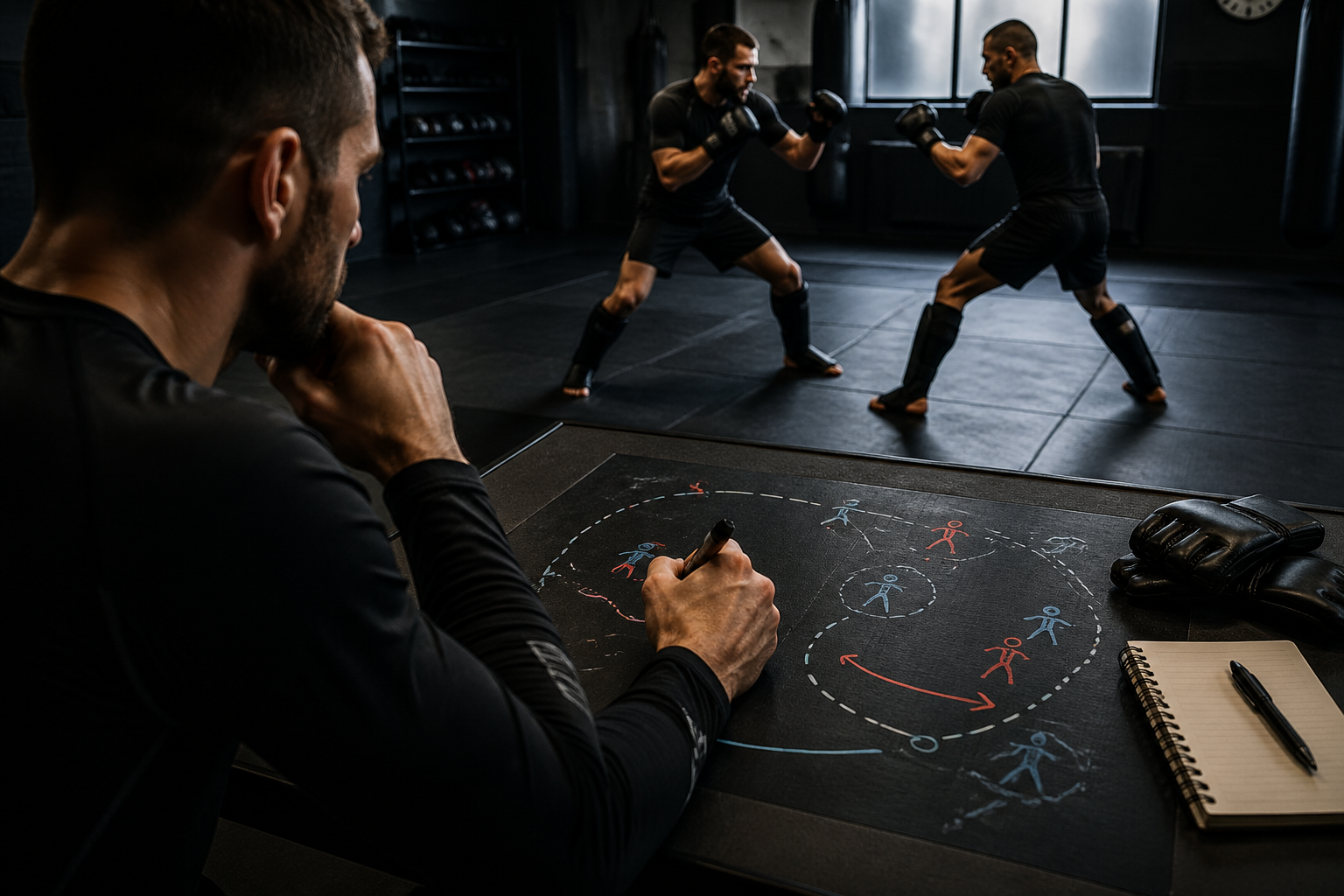
Read this first
- Chasing is often a late symptom, not the first problem.
- The first loss is usually attention, breath, posture, or timing.
- You do not need a big fix; you need a smaller, cleaner next move.
- A good reset restores options, not just calm.
- The best review question is: what changed before I started forcing the exchange?
What chasing actually looks like
Chasing is not just moving forward. It is the moment you start forcing contact because the earlier plan stopped working and you do not want to feel the gap.
A fighter may chase after a miss, after getting touched, or after losing initiative. The body keeps going, but the decision has already gotten narrow.
In Spiral Combat terms, the problem is not motion by itself. The problem is motion without reading. Once that happens, the fighter gives up geometry for urgency.
Chasing is usually a pressure response, not a personality flaw.
- Rushing in after a missed shot
- Crowding the opponent without a setup
- Throwing harder because the last attack failed
- Following instead of cutting off space
- Trying to win the moment back too fast
| Visible sign | What it often means | What to do next |
|---|---|---|
| Feet start crossing or squaring | Structure is slipping | Reset stance and exit angle |
| Breathing gets sharp | Pressure is rising | Take one beat and re-center |
| Eyes lock on one target | Attention has narrowed | Scan the whole frame again |
| Hands fire without setup | Urgency is driving the round | Slow the first action and rebuild the read |
Why pressure makes fighters chase
Pressure changes what the brain treats as important. Under stress, the fighter stops reading the whole exchange and starts hunting for the fastest way to feel back in control.
That is why the bad choice often feels automatic. The athlete is not always thinking, I will chase now. More often, the body is trying to close uncertainty as fast as possible.
Fight IQ grows when a fighter can notice that shift early. The goal is not to eliminate pressure. The goal is to stay readable inside it.
Pressure narrows options before it changes technique.
- Attention shrinks to one threat or one target
- Breathing gets shorter and more shallow
- Timing feels faster than it really is
- Normal exits feel farther away
- The fighter starts forcing rather than choosing
| Pressure change | What it does to the fighter | Better response |
|---|---|---|
| Narrow attention | Misses exits and setups | Look wider before acting |
| Rushed breathing | Adds panic to the round | Use one controlled breath |
| Speed bias | Makes every gap feel urgent | Wait one beat and read |
| Loss of timing | Creates forced entries | Rebuild the rhythm first |
What to notice first
Start with the earliest cue you can actually see or feel. In most rounds, that cue is not the wild mistake. It is the small break that comes before it.
Look for a rushed breath, square feet, locked eyes, a tighter jaw, or the moment the athlete stops scanning. Those are the kinds of signals that show the fight state changing in real time.
If you catch the cue early, the fix gets smaller. You are no longer repairing the whole round. You are recovering one usable position and one clearer decision.
Do not wait for the obvious mistake. Catch the narrowing before it turns into a scramble.
- Breath gets short or sharp
- Feet stop moving with balance
- Eyes stop scanning the full space
- Hands begin to reach without setup
- The athlete tries to force contact immediately
| Cue | Why it matters | Simple correction |
|---|---|---|
| Short breath | Panic is rising | Pause for one clean breath |
| Square stance | Exits get worse | Turn the feet and widen the base |
| Locked eyes | Reads get shallow | Look through the whole exchange |
| Reaching hands | Timing is slipping | Rebuild distance before re-entering |
The cleanest way to train it
Train chasing the same way you train any useful skill: with one cue, one reset, and one review question. Keep the system small enough to use under stress.
The cue tells you pressure is building. The reset gives you a physical answer. The review question tells you whether the reset actually helped.
This is easier to learn in slow rounds, film review, or light sparring than in a hard round. Once the pattern is clear, you can bring it back to live work.
One cue, one reset, one question. That is enough to start.
- Pick one cue you can see before you chase
- Pick one reset that restores stance and breath
- Pick one review question to ask after the round
- Test the cue in controlled sparring first
- Keep the correction simple enough to repeat
| Part | Example | Purpose | ||||||
|---|---|---|---|---|---|---|---|---|
| Cue | Eyes stop scanning | Shows pressure is narrowing | Reset | Small exit with a breath | Restores options | Review question | What disappeared first? | Trains honest film study |
Common mistakes fighters make
The biggest mistake is trying to fix everything at once. That usually turns a simple pressure problem into a vague mental project.
Another mistake is treating calm as if it were a personality trait. Calm under fire is built through repeatable cues, repeatable resets, and honest review.
A third mistake is confusing activity with progress. A fighter can move a lot and still be chasing if the movement is driven by panic rather than reading.
More effort is not the same as better decision making.
- Trying to change the whole game in one round
- Calling panic 'bad attitude' instead of a trainable state
- Adding complexity when the fighter needs one clear rule
- Forgetting to review what changed before the mistake
- Assuming hard movement means good pressure management
| Mistake | Why it hurts | Better fix |
|---|---|---|
| Fixing everything at once | Too much to remember under stress | Use one cue and one reset |
| Calling it a character issue | Misses the trainable part | Treat it like a repeatable skill |
| Too much complexity | Slows the next rep | Make the correction smaller |
| No review | The lesson disappears | Write down the first signal |
A quick decision framework
Use this framework when the exchange starts to feel slippery. It helps turn a vague feeling into a readable sequence.
Ask three questions: what changed, what options disappeared, and what is the smallest action that restores the next choice?
That is the Spiral Combat lens at work. Pressure, geometry, and timing become easier to manage when you can name the state before you answer it.
Read the state first. Then choose the next action.
- What changed before the chase started?
- Which option disappeared first?
- What is the smallest reset that brings options back?
- Can I act without forcing the round?
| Layer | What to check | Useful question |
|---|---|---|
| Pressure signal | Early change before the mistake | What shifted first? |
| Structure | Feet, posture, exits, space | Did I gain options or lose them? |
| Attention | Where the mind is locked | What stopped being visible? |
| Timing | Who owns the beat | Was I early, late, or forced? |
| Reset | Smallest useful recovery | What returns clarity fastest? |
Examples you can use right away
Real examples make the idea easier to hold onto. Use them in film study, coaching, or your own after-action notes.
The point is not to memorize these exact scenes. The point is to recognize the pattern earlier in your own rounds.
Each example shows the same theme: the chase starts when the fighter loses a readable state and tries to solve that loss with force.
Look for the state under the mistake.
- After a missed entry, the fighter rushes forward instead of resetting distance
- After taking a clean shot, the fighter stops scanning and shells in place
- After feeling pressured, the fighter keeps reaching instead of rebuilding stance
- After losing the beat, the fighter throws harder rather than re-reading timing
| Situation | What it often means | Cleaner next move |
|---|---|---|
| Missed attack | Urgency replaced the plan | Reset feet and re-enter cleanly |
| Early shelling | Attention narrowed to defense | Find one exit before adding offense |
| Feeling rushed | Timing broke first | Slow the rhythm and re-read |
| Forcing exchanges | Pressure is steering choices | Recover structure before action |
A coachable way to think about it
A coach does not need a grand speech here. A short, exact sentence often works better than a long correction.
Instead of saying, 'Stop chasing,' a coach can say, 'You lost the exit' or 'You stopped scanning.' That gives the athlete something observable to fix.
For self-coaching, the same rule applies. Use language that points to the state, not just the result.
Good coaching names the state before it names the error.
- Say what disappeared, not just what went wrong
- Keep the correction short enough to remember mid-round
- Use state-based language: breath, feet, eyes, exit, timing
- Avoid vague labels like 'be calmer' or 'focus more'
| Vague note | Better note |
|---|---|
| Stop chasing | Rebuild your exit before you enter |
| Be calmer | Take one breath when your eyes lock |
| Fight smarter | Read the spacing before you fire |
| Do not rush | Recover the beat before the next exchange |
A seven-day practice plan
Use one week to build the habit. The work should stay simple enough that you can repeat it without forcing it.
This is not about becoming perfect in seven days. It is about making the pattern easier to see and easier to name.
If you only have film and no sparring, do the review work anyway. If you only have sparring and no film, use your post-round notes.
Small daily review beats one big emotional correction.
- Day 1: watch one round and name the first pressure cue
- Day 2: choose one cue that shows up before you chase
- Day 3: choose one reset that brings back stance and breath
- Day 4: test the cue-reset pair in light sparring or drills
- Day 5: compare one round where you stayed readable and one where you did not
- Day 6: write one short coaching note in plain language
- Day 7: decide what still needs work and what already improved
| Day | Task | Result |
|---|---|---|
| 1 | Find the first cue | You know what to watch |
| 3 | Pick the reset | You know what to do |
| 5 | Compare two rounds | You see the pattern |
| 7 | Write the lesson | You keep the learning |
Common mistakes and better fixes
Most fighters do not need more motivation. They need a cleaner process for noticing what pressure does to them.
This table is meant to turn broad advice into a direct next step.
Use it after sparring, after film, or after a hard session when the round is still fresh.
The fix should be smaller than the problem.
- Mistake: trying to fix the whole round at once. Fix: choose one cue, one reset, one review question.
- Mistake: treating urgency as good aggression. Fix: ask whether the action created better options.
- Mistake: staying vague after the session. Fix: write the first sign you noticed.
- Mistake: overcoaching the next rep. Fix: give one short correction and let the fighter move.
| Mistake | Better fix |
|---|---|
| Trying to fix everything at once | Use one cue and one reset |
| Confusing rush with pressure management | Ask if options improved |
| Leaving the review vague | Name the first signal |
| Overloading the next round | Keep the correction short |
A seven-day practice plan
Use this as a simple way to turn the idea into a week of practice, film study, or coaching notes.
| Step | Action |
|---|---|
| Watch a round | Find the first moment pressure changed your choices, not the final mistake. |
| Pick one cue | Choose one sign you can see again and again, like locked eyes or short breath. |
| Choose one reset | Use a small breath, stance adjustment, or exit angle that gives you room to think. |
| Test it live | Try the cue-reset pair in light sparring or drilling until it feels simple. |
| Review it honestly | Write one sentence about what changed before you started forcing the exchange. |
Common mistakes and better fixes
Most mistakes come from reading the moment too late or trying to solve too much at once.
| Mistake | Better fix |
|---|---|
| Trying to fix the whole round at once | Use one cue, one reset, and one review question. |
| Confusing urgency with good pressure | Ask whether the action created better options or just more noise. |
| Treating composure like a personality trait | Build it through repeatable signals and repeatable recovery. |
| Using vague coaching language | Name the state in plain words: breath, feet, eyes, exit, timing. |
Reader checklist
- Can I explain the idea in one plain sentence?
- Can I name the first cue that shows pressure is rising?
- Do I know my smallest useful reset?
- Can I tell the difference between a symptom and the state under it?
- Do I have a simple review loop for after sparring?
Next Spiral Combat path
Read the Spiral Combat Codex next if you want to connect pressure, geometry, timing, and decision quality into one system.
Related Spiral Combat reading
FAQ
What is the first thing to study if I chase a lot in sparring?
Start with the earliest cue, not the final mistake. Look at breath, eyes, feet, and exits. The first useful clue is usually the one that shows pressure narrowed your choices before you rushed the next action.
How do I train pressure without making every round too emotional?
Keep it small. Use one cue to notice pressure, one reset to restore structure, and one review question after the round. That keeps the work specific instead of turning every spar into a drama.
What should a coach say instead of 'stop chasing'?
Say what changed. 'You lost the exit,' 'Your feet squared up,' or 'You stopped scanning' gives the athlete a clear problem to solve on the next rep.
How do I know if I am forcing the exchange?
If the action feels rushed, your posture is shrinking, and your choices feel narrower than they were a moment ago, you are probably forcing it. Better to recover stance and read the space again.
Key takeaways
- Chasing usually starts with pressure narrowing your options.
- The earliest cue matters more than the final mistake.
- A small reset is better than a big emotional correction.
- Good coaching names the state, not just the error.
- Fight IQ grows when you can read pressure before it owns the round.