
Table of contents
- Read this first
- What tactical patience actually is
- What changes under pressure
- The hidden decision problem
- What to notice first
- A simple way to train it
- Examples you can use right away
- Common mistakes
- A coachable way to think about it
- A seven-day practice plan
- How this shows up before the obvious mistake
- A seven-day practice plan
- Common mistakes and better fixes
- Reader checklist
Direct answer: Train tactical patience by learning to spot the first signs of pressure, keep your structure long enough to stay useful, and make one clean reset before you get dragged into a bad exchange.
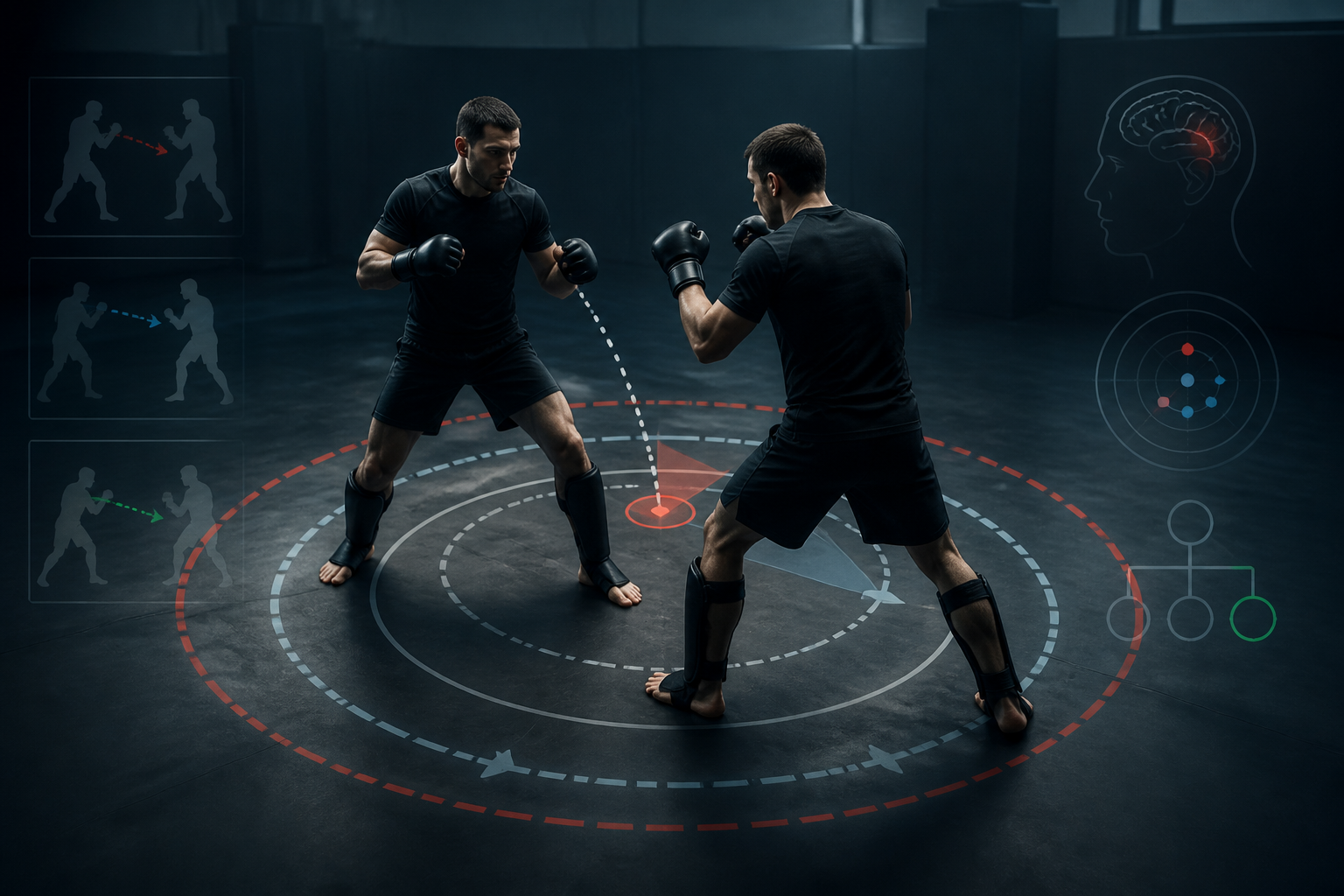
Tactical patience is the skill of staying readable, stable, and selective while pressure rises. It is not passive waiting. It is the ability to see the moment clearly enough to act on the right beat instead of forcing the wrong one.
Read this first
- Pressure usually breaks decision quality before it breaks technique.
- The first problem is often attention, breath, posture, or timing—not effort.
- A good reset should be small enough to use live.
- You do not need more thought; you need a clearer read.
- Use film, drills, and review to make the skill repeatable.
What tactical patience actually is
Tactical patience is the ability to delay the wrong action without losing the right one. A patient fighter is not slow, timid, or inactive. They are selective. They wait long enough to see the opening, but they do not drift into passivity.
This matters because pressure changes what feels urgent. Under stress, many fighters chase a result, rush an entry, or freeze on defense. Tactical patience keeps the mind from treating every second like a crisis.
Patience is not doing less. It is doing the next useful thing at the right time.
- Wait for a readable moment instead of forcing contact.
- Stay emotionally steady while the exchange develops.
- Keep enough structure to see and choose.
- Use the right beat, not the loudest one.
| State | What it looks like | What it causes |
|---|---|---|
| Rushed | Breathing speeds up, feet square off | Bad entries and wasted effort |
| Frozen | Hands stay high but nothing opens up | Missed chances and lost initiative |
| Selective | The fighter sees space before acting | Cleaner shots and better exits |
What changes under pressure
Pressure does not only make people tired. It changes what they notice first. Vision narrows, breath shortens, and the brain starts sorting everything around survival. That is why a fighter can still look active while losing access to the better option.
The real loss is often invisible at first. The body may still be moving, but the person has already stopped reading exits, timing, and distance with any real precision.
The first thing pressure usually attacks is perception, not muscle.
- Attention locks onto one threat or one target.
- Breath gets shallow and fast.
- Footwork gets square or heavy.
- The fighter starts forcing a result instead of reading the exchange.
| Pressure change | What to watch for | Why it matters |
|---|---|---|
| Attention narrows | Eyes stop scanning | The fighter misses exits and openings |
| Breath spikes | Chest rises, pace jumps | Decision quality drops |
| Posture collapses | Head leads, feet lag | Structure stops supporting the next action |
The hidden decision problem
Most fighters do not announce to themselves, 'I am making bad choices.' The problem feels automatic. They chase, shell, stall, or overcommit because the pressure has already changed the decision environment.
That is why tactical patience belongs in Fight IQ. Fight IQ is not just knowing more techniques. It is staying clear enough under stress to choose from the right options instead of the most emotional ones.
Good decision-making under pressure starts before the visible mistake.
- Notice when the menu of options gets smaller.
- Separate a real threat from a felt threat.
- Do not confuse urgency with clarity.
- Use one clean action to restore choice.
| Decision problem | Common reaction | Better response |
|---|---|---|
| Too much pressure | Chase or rush | Pause, breathe, and re-enter from structure |
| Too little clarity | Freeze or wait too long | Name the exit or frame you still have |
| Bad timing | Force the shot | Reset and look for the next beat |
What to notice first
Start with the first cue that tells you the exchange is getting away from you. That cue may be rushed breathing, square feet, late exits, locked eyes, or the urge to force contact. You do not need a perfect diagnosis in the moment. You need an early warning.
Once you can see the first cue, the correction gets smaller and more useful. Instead of trying to fix the whole round, you recover one readable state.
The earlier you spot the shift, the smaller the correction needs to be.
- Breath changes before technique fails.
- Feet often tell the truth before hands do.
- Eye lock usually means the read has narrowed.
- A sudden urge to force action is a warning sign.
| Early cue | What it usually means | Small correction |
|---|---|---|
| Rushed breathing | Pace is getting ahead of thinking | Slow the exhales and re-set stance |
| Square feet | Base is no longer ready to move | Recover angle and balance |
| Locked eyes | Scanning has stopped | Look wide again and re-read distance |
A simple way to train it
Use one cue, one reset, and one review question. That is enough to start. The cue tells you pressure is rising. The reset gives you a physical way back to structure. The review question keeps the lesson honest after the round.
This is how a vague trait becomes trainable. You are not trying to become a different personality. You are building a repeatable response to stress.
One cue, one reset, one review question. Keep the loop small.
- Cue: name the first pressure sign.
- Reset: use a small movement, breath, or frame.
- Review: ask what option disappeared first.
- Repeat until the cue feels early, not late.
| Part of the loop | What it does | Example |
|---|---|---|
| Cue | Warns you early | Eyes stop scanning |
| Reset | Brings you back to structure | Small exit and breath |
| Review | Turns the rep into learning | What choice disappeared first? |
Examples you can use right away
Examples matter because pressure looks different in every room. A fighter who chases after a miss is not showing the same problem as a fighter who shells too early, but both may be losing the same thing: access to a clear next choice.
Use these examples as starting points. Then replace them with your own rounds, clips, and coaching notes.
The symptom changes. The underlying state often does not.
- After a miss, the athlete lunges again instead of resetting.
- A fighter shells up too early and gives away initiative.
- Someone says they felt rushed, but the real issue was late recognition.
- The athlete keeps firing without seeing whether the angle changed.
| Situation | What it may signal | Cleaner next move |
|---|---|---|
| Chasing after a miss | Panic has replaced the original plan | Reset the feet, breathe, and re-enter from structure |
| Shelling too early | Attention has narrowed to survival | Name one exit or frame before adding offense |
| Feeling rushed | Timing has collapsed | Slow the drill and find the first cue |
Common mistakes
The biggest mistake is treating composure like personality. It is not a gift some people have and others do not. In training, composure is often a set of habits: a readable cue, a stable base, and a recovery that can be repeated.
Another mistake is making the idea too abstract. If the lesson never connects to a real round, it stays theory. If it never gets reviewed, it never becomes skill.
Composure is trained through signals, structure, and review.
- Trying to fix every problem at once.
- Confusing intensity with clarity.
- Using broad advice instead of one clear cue.
- Skipping the review after the round.
| Mistake | Why it fails | Better fix |
|---|---|---|
| Too broad | Nothing changes in the next rep | Pick one cue and one reset |
| More effort instead of better read | Intensity does not always improve decisions | Check whether options improved |
| No follow-up | The lesson disappears after training | Write one note from the round |
A coachable way to think about it
The best coaching question is not, 'Do you understand tactical patience?' The better question is, 'What will you notice sooner because of it?' That is where the skill becomes useful.
Coaches can use this language to keep the athlete anchored in reality. Instead of giving a long speech, name the state, point to the cue, and ask for the next clean action.
A good coaching cue reduces confusion instead of adding it.
- Name the first sign out loud.
- Ask for one small reset.
- Tie the correction to a visible action.
- Keep the next instruction short and specific.
| Coaching cue | Purpose | Example |
|---|---|---|
| Name the state | Make the problem visible | Your eyes stopped scanning |
| Ask for a reset | Restore structure | Take the angle and breathe |
| Ask for the next read | Rebuild choice | What is the clean exit here? |
A seven-day practice plan
Keep the work small enough to finish. The point is not to solve pressure in a week. The point is to build a clear habit around how you notice and recover.
Use film, live rounds, shadow work, or coaching notes. Any honest rep will do if you review it right after.
Small, repeatable work beats big, vague intentions.
- Day 1: Watch one round and name the first pressure cue.
- Day 2: Pick one cue that appears before the mistake.
- Day 3: Choose one reset that works live.
- Day 4: Test the cue and reset in a controlled drill.
- Day 5: Compare one good rep and one bad rep.
- Day 6: Write one coaching sentence or self-note.
- Day 7: Decide what deeper lesson this pattern points to.
| Day | Task | Goal |
|---|---|---|
| 1 | Watch one round | Spot the first cue |
| 3 | Choose a reset | Make recovery simple |
| 5 | Compare two reps | See what changed |
| 7 | Write the lesson | Turn the pattern into memory |
How this shows up before the obvious mistake
The obvious mistake usually comes late. By then the fighter is already chasing, freezing, rushing, or giving away position. The earlier signs are softer: narrowed attention, rushed breath, or a moment where the fighter stops seeing exits.
That is why good analysis separates the symptom from the state. A bad shot, a bad shell, or a bad entry is the visible result. The state underneath may be panic, fatigue, embarrassment, overcommitment, or the need to win the moment back too fast.
If you can read the state earlier, you can interrupt the mistake earlier.
- Visible mistake: bad entry; hidden state: forced timing.
- Visible mistake: frozen guard; hidden state: narrowed attention.
- Visible mistake: wild chase; hidden state: panic or ego recovery.
- Visible mistake: hesitation; hidden state: uncertainty about options.
| Visible mistake | Likely hidden state | What to ask next |
|---|---|---|
| Chasing | Panic or urgency | What did they stop seeing? |
| Freezing | Overload or uncertainty | What option was still there? |
| Forcing | Impatience | What beat were they trying to beat? |
A seven-day practice plan
Use this as a simple way to turn the idea into a week of practice, film study, or coaching notes.
| Step | Action |
|---|---|
| Step 1 | Watch one hard round or training clip and write the first cue that showed pressure was rising. |
| Step 2 | Choose one reset you can actually use while the round is live, such as a breath, angle, or frame. |
| Step 3 | Test the cue and reset in a controlled drill or light sparring round. |
| Step 4 | Review the rep with one question: what option disappeared first? |
| Step 5 | Repeat until the cue becomes earlier and the reset becomes automatic. |
Common mistakes and better fixes
Most mistakes come from reading the moment too late or trying to solve too much at once.
| Mistake | Better fix |
|---|---|
| Treating tactical patience like personality | Train it as a repeatable response to pressure, not a personality trait. |
| Waiting too long to act | Look for the first narrowing of attention, breath, or posture and reset sooner. |
| Making the correction too big | Use one cue, one reset, and one review question. |
| Reviewing the round in vague terms | Write down the exact moment the mind changed before the technique changed. |
Reader checklist
- Can I explain tactical patience in one plain sentence?
- Can I name the first cue that showed pressure was rising?
- Do I know the smallest reset that helps me stay useful?
- Did I connect the idea to a real round or clip?
- Did I write one review note I can use next session?
Next Spiral Combat path
Next, connect this idea to pressure, geometry, and timing in the Spiral Combat Codex, then compare how different fighters lose or recover structure under stress.
Related Spiral Combat reading
FAQ
What is tactical patience in fighting?
It is the ability to wait for a useful opening without losing structure, attention, or timing. The fighter stays ready, not passive.
How do I train tactical patience in sparring?
Pick one early cue, one live reset, and one review question. Use them in controlled rounds until you can spot pressure sooner and recover faster.
What is the first sign that pressure is changing my decisions?
It is often narrowed attention, rushed breathing, square feet, or the urge to force an exchange. The exact cue depends on the fighter.
How does this fit into Fight IQ?
Fight IQ includes reading state, timing, initiative, and consequence. Tactical patience helps you stay clear enough to use that reading under stress.
What should I study after this?
Study pressure, timing, and structure together. The Spiral Combat library works best when those pieces are read as one system instead of separate ideas.
Key takeaways
- Tactical patience is selective action under pressure, not passive waiting.
- The first problem is usually perception, not effort.
- One cue, one reset, and one review question is enough to start.
- Good coaching keeps the correction small and specific.
- A short review loop turns pressure into usable Fight IQ.