
Table of contents
- Read this first
- What changes under pressure
- The hidden decision problem
- What to notice first
- A practical way to train it
- Examples you can use right away
- A coachable way to think about it
- A seven-day practice plan
- Common mistakes
- How this shows up before the obvious mistake
- A simple review loop
- Reader checklist
Direct answer: Pressure training helps martial artists notice the first signs of stress, keep enough structure to stay functional, and make one clean next choice instead of panicking or freezing. In plain terms: read the change early, keep your base, and recover fast enough to stay in the fight.
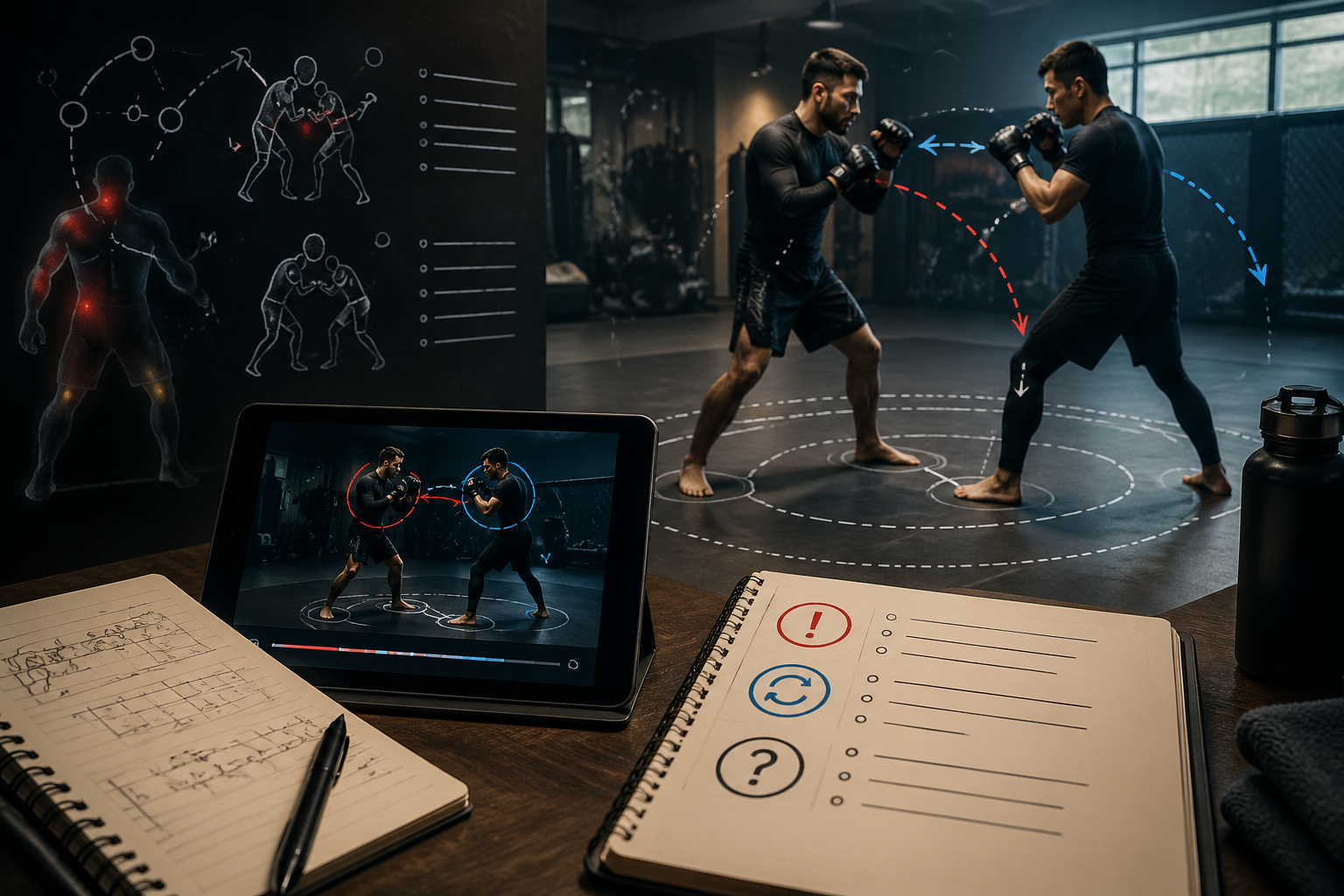
Pressure training matters because pressure changes what a fighter sees, what they trust, and what they do next. The visible mistake is usually late. The real job is to spot the first shift in attention, breath, posture, or tempo and reset before the exchange runs away.
Read this first
- Pressure is not just volume or aggression; it is any force that changes decision-making.
- The first breakdown is often mental or perceptual, not technical.
- A useful reset is small: breathe, move the feet, re-square the posture, regain the exit.
- Good coaching names the state before it tries to fix the whole exchange.
What changes under pressure
Pressure changes what the fighter notices first. Vision narrows, breathing gets shorter, and the mind starts grabbing for the quickest answer instead of the best one.
That is why the bad action on the surface is usually only the last step in a longer chain. The earlier problem is often a shift in attention, rhythm, or perceived time.
A fighter may still look active while losing access to the tools that make the exchange manageable. The score does not always show that loss right away.
Look for the first narrowing: breath, eyes, feet, or tempo. That is usually the real start of the problem.
- Attention narrows before technique falls apart.
- Tempo feels faster when the mind is overloaded.
- A small loss of structure can create a large tactical mistake.
| Layer | What changes | What to watch |
|---|---|---|
| Breath | Shorter, shallower breathing | Rushed inhalation or a held breath |
| Eyes | Less scanning, more fixation | Staring at one target or one threat |
| Feet | Less base, less mobility | Square stance, stuck heels, crossed exits |
| Timing | The sense of the beat changes | Late reactions, forced entries, rushed counters |
The hidden decision problem
A fighter rarely thinks, I am choosing badly right now. It feels more automatic than that. They chase, shell up, overcommit, or wait too long because the pressure has already changed the decision environment.
This is where Fight IQ matters. Fight IQ is not just knowing more techniques. It is keeping enough perception alive to choose from the right options under stress.
If the fighter cannot read the state, they will keep trying to solve the wrong problem. The action may be sharp, but the choice is already late.
The issue is not only technique. Pressure can change the menu before the fighter even realizes it.
- Bad choices often come from a bad state, not a bad attitude.
- A narrow menu creates predictable reactions.
- Better reading beats more force when the goal is a clean decision.
| State | Common reaction | Better coaching question |
|---|---|---|
| Survival mode | Shell, freeze, or stall | What option did the fighter stop seeing? |
| Panic | Rush the exchange | What changed right before the rush? |
| Embarrassment | Force action to recover pride | What would a smaller next step look like? |
| Overcommitment | Chase and extend too far | Where is the exit or reset? |
What to notice first
Start with the first visible cue, not the final error. That cue might be a held breath, square feet, locked eyes, or the sudden need to force the pace.
Once the first cue is visible, the correction gets smaller and more useful. You are no longer trying to fix the whole round. You are trying to recover one readable state.
Coaches should name the cue in plain language. Fighters should learn to notice it in themselves without waiting for the blow-up.
Do not wait for the collapse. Train the moment right before the collapse shows itself.
- Rushed breathing
- Square or planted feet
- Eyes locked on one target
- Loss of scanning
- A sudden urge to force the exchange
| Cue | What it often means | Immediate response |
|---|---|---|
| Breath shortens | Stress is rising | Exhale, reset the pace |
| Feet square up | Mobility is dropping | Rebuild stance and angle |
| Eyes stop scanning | Awareness is narrowing | Look off-center and re-read the space |
| Pressure feels urgent | The fighter is forcing | Pause, frame, and choose the next clean entry |
A practical way to train it
Keep the loop simple: one cue, one reset, one review question. That is enough to make pressure visible without turning training into theory.
The cue tells you when the state is changing. The reset gives the body something small and reliable to do. The review question tells you whether the rep got cleaner.
This works in live rounds, partner drills, film study, and coaching notes. The point is not to create a perfect system. The point is to build a repeatable read.
One cue. One reset. One review question. Keep the loop small enough to actually use.
- Cue: notice the first sign of pressure.
- Reset: breathe, step, frame, or re-angle.
- Review: what disappeared first?
| Part | Purpose | Example |
|---|---|---|
| Cue | Marks the rising pressure | Eyes stop scanning |
| Reset | Restores function | Small exit and exhale |
| Review | Learns the pattern | What option vanished first? |
Examples you can use right away
Examples matter because the idea should connect to real training, not just good language. Use these as starting points, then replace them with your own rounds, clips, and notes.
The best examples are simple. They show the pressure pattern, the state underneath it, and the smaller next move that makes sense.
When fighters and coaches can name the state, they can usually make the correction faster.
The goal is not to sound smart. The goal is to see the pattern sooner.
- Missing a shot and immediately chasing usually means status panic.
- Shelling up too early often means the fighter lost the wider picture.
- Saying “I felt rushed” usually means the timing changed before the technique failed.
| Situation | What it usually means | Cleaner next move |
|---|---|---|
| The athlete chases after missing | Pride or panic has taken over | Reset the feet, breathe, re-enter from structure |
| The athlete shells up too early | Attention has narrowed to survival | Name one exit before adding offense |
| The athlete feels rushed | The beat changed before the skill broke | Slow the drill and find the first timing cue |
A coachable way to think about it
The best coaching question is not, Do you understand pressure? It is, What did pressure make you stop seeing?
That question keeps the focus on perception, not ego. It gives the fighter something concrete to report and something concrete to change.
A fighter who can describe the state clearly is easier to coach and faster to improve. That is one of the quiet strengths of good Fight IQ work.
Ask what disappeared, not just what failed.
- What did the fighter stop seeing?
- What did they start forcing?
- What smaller action would have kept the round readable?
| Bad question | Better question |
|---|---|
| Why did you mess that up? | What changed before the mistake? |
| Why did you freeze? | What did you lose sight of? |
| Why did you rush? | What beat or cue made the pace feel urgent? |
A seven-day practice plan
Use this plan if you want a small, workable way to study pressure without overcomplicating it. The goal is steady observation, not a big performance jump in one week.
Each day adds one layer. By the end of the week, you should have a clearer sense of your own pressure pattern or the pattern of the athlete you coach.
Keep the notes short. A single clean observation is more useful than a long explanation that no one reads again.
Short notes beat vague insights. Write what changed, what you saw, and what you did next.
| Day | Action |
|---|---|
| Day 1 | Watch one round or clip and write the first pressure cue you notice. |
| Day 2 | Choose one cue that appears before the mistake, not after it. |
| Day 3 | Pick one small reset that works while the round is still live. |
| Day 4 | Test the cue and reset in a controlled drill or slow review. |
| Day 5 | Compare one moment where options expanded and one where they narrowed. |
| Day 6 | Write one coaching sentence or self-review note from the pattern. |
| Day 7 | Decide what deeper lesson, video, or study path should follow. |
Common mistakes
One mistake is treating composure like personality. In reality, composure is often a trained response built from cues, resets, and honest review.
Another mistake is adding complexity when the athlete needs a cleaner first read. If the state is already overloaded, more ideas can make the problem worse.
A third mistake is reviewing only the visible error. If you skip the lead-up, you miss the pressure pattern that created it.
Do not train the last mistake and ignore the first signal.
- Treating calm as a trait instead of a skill
- Adding too many corrections at once
- Reviewing the error but not the lead-up
- Confusing intensity with clarity
| Mistake | Better fix |
|---|---|
| Trying to fix everything at once | Choose one cue, one reset, and one review question |
| Mistaking intensity for clarity | Check whether the extra effort created better options |
| Keeping it theoretical | Tie the idea to a real round, clip, or coaching note |
| Skipping the follow-up | Track what to watch, train, or compare next |
How this shows up before the obvious mistake
The visible error usually comes late. By the time the fighter chases, freezes, rushes, or gives up position, the pressure pattern has already been building.
The better read is earlier: a narrowing of attention, a rushed breath, a loss of scanning, or the moment the fighter stops seeing exits.
That difference matters because different states need different corrections. A bad shot, a bad shell, or a bad entry may look similar from the outside, but the cause underneath may be panic, fatigue, embarrassment, or overcommitment.
Read the state before you correct the technique.
- Visible mistake: late and obvious
- Underlying state: early and often hidden
- Coaching value: smaller, more accurate corrections
| Visible action | Possible state underneath | Coach response |
|---|---|---|
| Chasing after a miss | Panic or pride | Name the cue and ask for one reset |
| Freezing under contact | Survival mode | Reduce the task and restore movement |
| Rushing into range | Time pressure | Slow the drill and isolate the beat |
| Abandoning structure | Overload or fatigue | Rebuild base and exits first |
A simple review loop
After the round, write down one moment when the mind changed before the technique changed. Keep it short and specific.
Ask three questions: What did the fighter stop seeing? What did they start forcing? What option was still there but no longer felt available?
This turns psychology into training data. Over time, the athlete learns their own pressure map: what makes them chase, what makes them wait, and what makes them lose structure.
One signal, one reset, one lesson. That is enough for the review loop.
- Write the first cue you saw.
- Write the reset you used or should have used.
- Write the option that disappeared first.
| Review question | Why it helps |
|---|---|
| What changed first? | Finds the lead-up |
| What disappeared? | Shows the cost of pressure |
| What should happen next time? | Turns the lesson into action |
Reader checklist
- I can explain the idea in one plain sentence.
- I can name the first cue in a real exchange.
- I know what a small reset would look like.
- I can point to the option that disappeared first.
- I have one review question I can use after the round.
- I have one Spiral Combat lesson or resource that naturally connects next.
Next Spiral Combat path
Continue with Spiral Combat’s Fight IQ library and the Codex path on pressure, geometry, and timing so this idea connects to the larger system.
Related Spiral Combat reading
FAQ
What is the simplest way to study pressure in training?
Watch a round or drill and write down the first cue that appears before the obvious mistake. Then test one small reset, such as an exhale, a step, or a frame, and review what changed.
What should I notice first under pressure?
Start with the earliest visible change: breath, eyes, feet, or tempo. Those cues usually show up before the technique falls apart.
How do coaches teach pressure without overloading the athlete?
Keep the coaching loop small. Name the cue, give one reset, and ask one review question after the rep.
What does pressure do to fight IQ?
Pressure can narrow attention and shrink the menu of options. Good fight IQ keeps enough perception online to make a cleaner choice.
What is the best next step after I notice the pattern?
Write one short note from the round, then test the cue and reset again in a controlled drill or the next live session.
Key takeaways
- Pressure changes perception before it changes the scoreboard.
- The first cue is usually breath, eyes, feet, or tempo.
- A small reset is more useful than a big speech.
- Coaching improves when it names the state, not just the mistake.
- A short review loop can turn pressure into usable training data.