
Table of contents
- Read this first
- Why pressure training needs a clear signal
- What pressure training should actually build
- A pressure-training framework
- Examples of useful pressure layers
- How to build a pressure drill
- A seven-day practice plan
- Common mistakes and better fixes
- Reader checklist
- Next Spiral Combat path
- Related Spiral Combat reading
- FAQ
- Key takeaways
Direct answer: Pressure training is the practice of adding stress in controlled layers so a fighter can keep structure, awareness, and decision quality under live resistance.
Pressure training teaches an athlete to keep seeing, breathing, and choosing when the round starts to feel crowded.
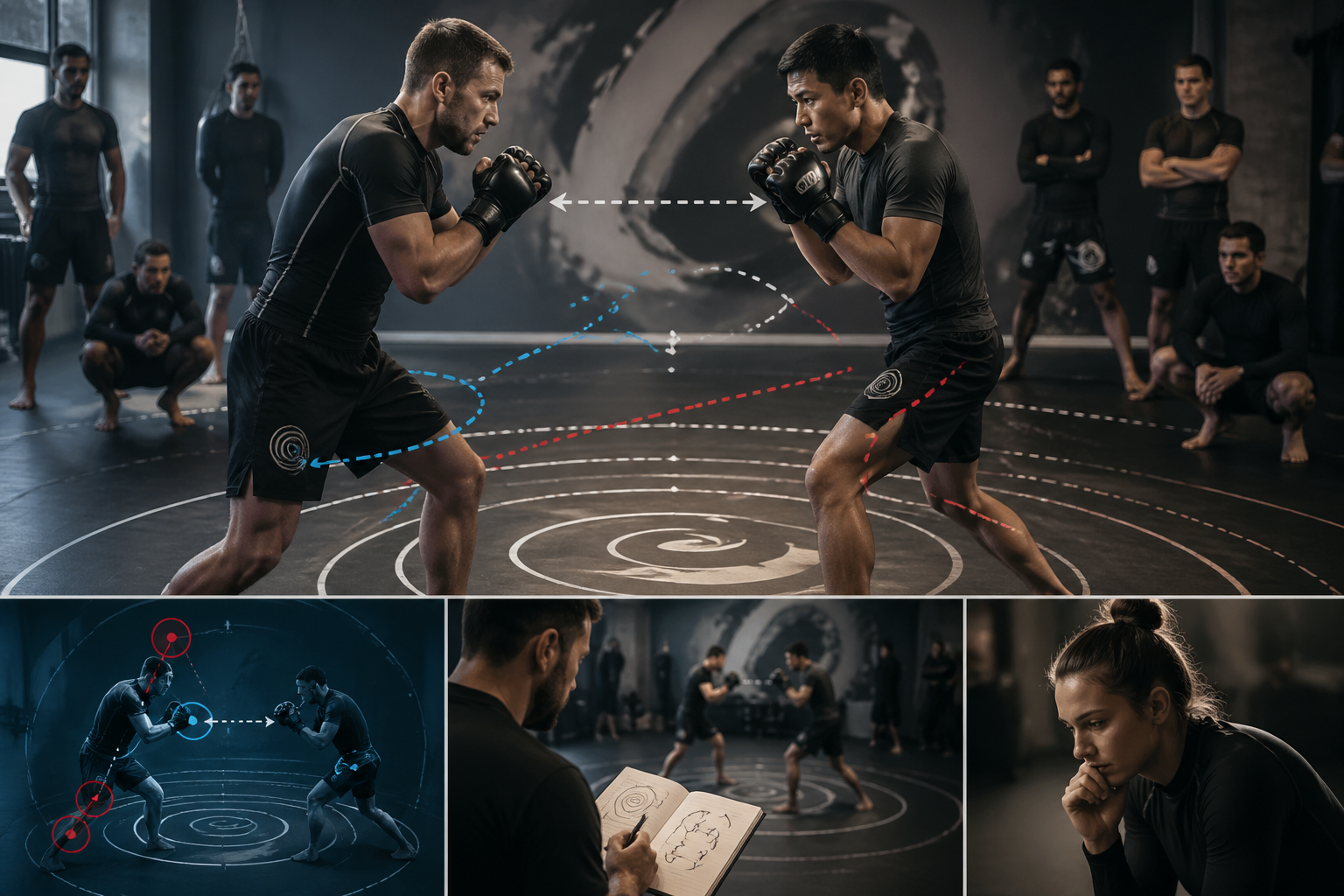
Read this first
- Pressure should be trained in layers. Too much too early only teaches panic.
- The practical goal is simple: notice attention narrowing under stress early enough to choose a cleaner next action.
- Use the examples as training notes, not as rigid rules.
Why pressure training needs a clear signal
The common problem is making pressure training too hard before the athlete has a clear cue. It usually shows up before the obvious mistake, which is why the useful work starts earlier than most people look.
When pressure is random and overwhelming, the athlete may toughen up, but they do not always learn what to see or how to recover. A fighter who can name the change has more time, more options, and less panic. A coach who can name it can give a smaller correction that survives pressure.
For Spiral Combat, the point is not to make the idea sound deeper. The point is to make it more usable: what changed, what options remained, and what should happen next.
Good pressure training does not just make the round harder. It makes the signal easier to read.
What pressure training should actually build
The goal is to expose the athlete to stress while preserving one clear decision. In plain English, the athlete is trying to keep enough awareness to see the moment clearly while the exchange is still moving.
That means the best read is rarely one giant answer. It is a chain of small observations: breath, posture, sight, timing, and whether the athlete can still name the next useful action.
When those observations are clear, the next action can be simple. The athlete does not need to solve the whole fight at once. They need one cleaner choice that keeps the round readable.
- Look for attention narrowing under stress.
- Ask what option just disappeared.
- Choose the smallest action that restores clarity.
A pressure-training framework
Use this framework when pressure training feels too broad. It turns the idea into a scan you can use in sparring, film study, or coaching notes.
The table is intentionally simple. If the question is hard to answer under pressure, it is probably too big for live training.
| Layer | What to notice | Cleaner question |
|---|---|---|
| Entry | The moment intensity changes | What changed before the athlete reacted? |
| Space | Whether exits, frames, and stance still exist | Did the person gain options or lose them? |
| Timing | Whether the athlete chooses before panic takes over | Was the next move early, late, or forced? |
| Attention | Whether they can still see more than one option | What did pressure make them stop seeing? |
| Reset | Breathe, frame, angle, clinch, circle, or re-center | What small action makes the next exchange cleaner? |
Examples of useful pressure layers
Examples matter because pressure training should be visible in real moments, not only in theory.
Use these examples as a starting map. Then replace them with your own rounds, clips, member questions, or coaching notes.
| Situation | What it means | Better next move |
|---|---|---|
| Boxing partner doubles jab volume | Sight and rhythm are being tested | Keep the guard active and step to an angle after the second jab. |
| Wrestling partner chains stand-ups | Control has to survive repeated attempts | Win the first post and reset chest pressure. |
| MMA round starts against the fence | Space is already limited | Build one frame, one underhook, or one turn before adding offense. |
How to build a pressure drill
Start with one kind of pressure and one success rule. Keep the drill small enough that the athlete can repeat it without turning the round into a lecture.
The best version is observable. You should be able to point to the clip, name the cue, and say whether the next rep improved.
If the athlete cannot tell you what they were training, the drill was probably too broad.
- Choose the pressure type.
- Choose the single cue.
- Choose the reset.
- Add intensity only after the reset appears.
A seven-day practice plan
Use this as a simple way to turn the idea into a week of practice, film study, or coaching notes.
| Step | Action |
|---|---|
| Day 1 | Watch one round and mark every moment where attention narrowing under stress appears. |
| Day 2 | Choose one reset that fits the pattern: one breath, one frame, and one angle out. |
| Day 3 | Run a controlled drill where the athlete names the cue before adding intensity. |
| Day 4 | Add light resistance and keep the same cue. Do not add three new goals. |
| Day 5 | Compare a clean rep and a messy rep. Write the first difference you can see. |
| Day 6 | Turn the lesson into one coaching sentence or self-review question. |
| Day 7 | Decide whether the topic needs a deeper lesson, video, or member drill. |
Common mistakes and better fixes
Most mistakes come from reading the moment too late or trying to solve too much at once.
| Mistake | Better fix |
|---|---|
| Looking only at the final mistake | Look earlier for attention narrowing under stress, because the final mistake is usually the last symptom. |
| Adding too many corrections | Use one cue, one reset, and one review question until the pattern is stable. |
| Confusing effort with clarity | Ask whether the athlete gained better options, not whether they worked harder. |
| Turning the idea into theory only | Attach it to a real clip, drill, round, or coaching note. |
Reader checklist
- Can I explain pressure training in one plain sentence?
- Can I point to attention narrowing under stress in a real exchange?
- Can I name the option that disappeared?
- Do I have one reset, such as one breath, one frame, and one angle out?
- Do I know what to watch in the next round?
Next Spiral Combat path
Use the Spiral Combat Codex when you want the deeper system for pressure, geometry, timing, rhythm, and decision quality.
Related Spiral Combat reading
FAQ
What is pressure training in plain English?
It is controlled practice under stress, designed to help a fighter keep seeing options instead of reacting blindly.
How should I train this without overthinking?
Pick one cue and one reset. For this topic, start with attention narrowing under stress, then test one breath, one frame, and one angle out in a controlled round or film session.
Is this only for advanced fighters?
No. Beginners can use the same idea if the language stays simple and the drill stays small. Advanced athletes can add speed, resistance, and tactical layers later.
How does this connect to Spiral Combat?
It fits the larger Spiral Combat lens because it turns pressure, timing, rhythm, and attention into things you can actually see and train.
Key takeaways
- Pressure training should build clarity, not just tolerance.
- Start by noticing attention narrowing under stress.
- The best correction is usually smaller than the mistake looks.
- A useful Fight IQ article should change what you see in the next round.